Reviewing the Teach from Home Learn from Home Design
As a designer who has spent countless hours digitizing and testing embroidery patterns, I approach every new file with a critical eye. It is not just about whether the design looks good on a screen; it is about how it translates to thread, how it behaves on fabric, and ultimately, how it serves the end user. Recently, I evaluated the Teach from Home Learn from Home design, a piece that sits squarely in the School Amp category under Crafts. This review breaks down my practical experience with this digital embroidery file, focusing on its real-world application for craft businesses, Etsy sellers, and hobbyists alike.
First Impressions and Visual Personality
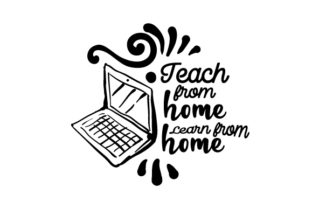
The first thing that strikes you about the Teach from Home Learn from Home design is its timely relevance and clear messaging. In an era where remote education has become a staple of daily life, this motif captures a specific cultural moment. Visually, the layout feels balanced, likely utilizing a mix of text and simple iconography to convey its theme without becoming overly cluttered. For an embroidery project, clarity is king. If the design relies too heavily on tiny details or complex gradients, it risks losing definition once stitched. However, based on the provided formats—SVG File, Transparent PNG, EPS, and DXF—it appears intended for versatility across both cutting machines and embroidery software.
The mood created here is one of resilience and adaptability. It is professional yet approachable, making it suitable for a wide range of audiences. Whether you are creating a personalized gift for a teacher transitioning to virtual classrooms or designing merchandise for a small shop product line, the visual personality of this design leans towards the supportive and modern. It does not scream for attention with excessive ornamentation but rather communicates its message through clean lines and recognizable symbols.
Real-World Application: The Custom Tote Bag Scenario
To truly test the viability of any machine embroidery design, I imagine it in a concrete production scenario. Let us consider a custom embroidered tote bag. This is a high-demand item for Etsy sellers and boutique branding. When applying the Teach from Home Learn from Home motif to a canvas tote, several factors come into play. Canvas is a sturdy fabric with a distinct weave, which means the stitch density of the design must be sufficient to cover the texture without sinking in.
If this design utilizes a satin stitch for borders or text, it will pop beautifully against the neutral background of a natural cotton tote. The contrast between the thread colors and the fabric is crucial here. I would recommend using dark navy or charcoal threads on a light beige bag to ensure readability. The transparent PNG included in the package allows for easy mockup creation, helping sellers visualize the finished product before committing to stitching. This is a vital step for maintaining customer trust and reducing return rates due to mismatched expectations.
Apparel and Personalized Gifts
Beyond tote bags, this design shines in the realm of custom apparel. Imagine a soft, heather-grey sweatshirt embroidery piece. The comfort of a sweatshirt pairs well with the "home" aspect of the message. Here, the hoop size becomes a critical consideration. You must confirm that the design fits within your standard hoops, typically 4x4 or 5x7 inches, depending on the scale. For baby embroidery, such as a onesie or a burp cloth, the design might need to be scaled down. However, caution is advised. Reducing the size too much can cause the letters to merge, especially if the original digitizing did not account for extreme minimization.
For personalized gifts, such as a teacher appreciation present, this design offers a heartfelt touch. It moves beyond generic "Best Teacher" slogans and acknowledges the specific challenges of remote learning. This specificity increases the perceived value of the handmade product. Buyers are often willing to pay a premium for items that feel current and thoughtful. By using this design, you are tapping into a shared experience, which enhances buyer engagement and emotional connection.
Technical Considerations and Stitching Clarity
When working with any digital embroidery file, technical execution determines the quality of the finished product. The Teach from Home Learn from Home design likely contains a combination of fill stitches for larger areas and running stitches for finer details. Understanding stitch density is essential. If the design is too dense, it can cause puckering, especially on thinner fabrics like t-shirts or kitchen towels. Conversely, if it is too sparse, the fabric may show through, ruining the visual appeal.
I strongly advise testing the design on scrap fabric first. This simple step can save hours of frustration. Check how the thread colors interact with the fabric texture. For instance, on a textured tea towel, a design with heavy satin stitching might sit nicely on top, while a flat fill stitch might get lost in the weave. Additionally, inspect small details. Are there tiny corners or sharp angles that might bunch up? If so, you may need to adjust the underlay or use a cutaway stabilizer to provide extra support.
Another critical aspect is the file format. While SVG and DXF are excellent for cutting machines, ensure you have the correct embroidery file format for your machine, such as PES or DST, if not explicitly listed. The inclusion of EPS suggests vector scalability, which is useful for resizing before digitizing or for graphic design purposes. However, remember that resizing an embroidery design after digitizing can distort stitch paths. Always check the recommended hoop size and do not exceed it without re-digitizing.
Where to Use Caution
Not every surface is ideal for this design. Curved surfaces like caps require careful placement. The curvature can distort the text, making "Teach from Home Learn from Home" difficult to read if not centered perfectly. Furthermore, stretchy fabrics pose a challenge. Without proper stabilizer, the design can warp after washing. Dark fabrics require careful thread color selection to ensure contrast. A black thread on a navy shirt will vanish. Always test your thread colors on the actual fabric you intend to use.
Additionally, consider the care instructions of the final product. Items that need frequent washing, such as baby clothes or kitchen aprons, must be stitched securely. Loose threads or poor tension can lead to unraveling. Ensure that your machine is properly threaded and tensioned before starting the job. For commercial embroidery projects, consistency is key. Every item should look identical, which requires strict adherence to your testing protocol.
Enhancing Brand Consistency and Value
For small business owners and creative entrepreneurs, the Teach from Home Learn from Home design can be a valuable asset in your library. It fits well within a broader collection of educational or work-from-home themed products. Using consistent design elements across your Etsy listings or craft fair products helps build brand recognition. When customers see a cohesive style, they are more likely to trust your professionalism and return for future purchases.
The design also lends itself well to printable mockups. By using the transparent PNG, you can create high-quality images for your online store without having to stitch every single variation. This saves time and resources while still providing customers with a realistic view of the potential finished product. However, always disclose that the image is a mockup to maintain transparency and avoid misleading buyers.
Final Designer Notes
Before you begin your next embroidery project with this design, take a moment to review the licensing terms. Confirm whether the file allows for commercial use if you plan to sell finished items. While the product description lists the formats, it does not specify stitch count or exact machine compatibility. Therefore, it is your responsibility to verify these details with the seller or through your own testing.
In summary, the Teach from Home Learn from Home design is a practical, relevant addition to your craft business toolkit. It offers a blend of modern sentiment and versatile application, suitable for everything from tote bags to sweatshirts. By paying attention to stitch density, fabric choice, and proper stabilization, you can produce high-quality, professional-looking items that resonate with your customers. Remember, the success of any embroidery project lies in the details. Test thoroughly, choose your materials wisely, and let the design speak for itself.